The story behind Connecting Africa naming Pashione "Hot Startup of the Month" and the lessons that apply to every founder building across this continent.

December 2025.
That's when Matshepo Sehloho from Connecting Africa sat me down for a conversation that became "Hot startup of the month: Nigeria's Pashione."
Three months later, that feature is still the number one thing new people ask me about.
"How did that interview happen?" "What did they ask that didn't make the final cut?" "Looking back, would you change any answer?"
So today, I'm doing something I haven't done before.
I'm pulling back the curtain on that entire conversation the questions that made me think, the answers that still hold true, and the lessons that have emerged in the months since.
If you've ever wondered what it actually looks like when a cybersecurity guy builds a fashion-tech platform, this issue is for you.
Let's go back to December.
The Question Everyone Asked
"You're leaving cybersecurity... for fashion?
I lost count of how many times I heard that in 2023.
And I understood the confusion. On paper, it looked like a pivot. A hard one.
I had spent years in cybersecurity, e-commerce, and fintech. I understood threat modeling, compliance frameworks, and secure infrastructure. I spoke the language of GRC—Governance, Risk, and Compliance fluently.
Fashion? What did I know about fashion?

But here's what the question missed:
I wasn't leaving tech. I was redirecting it.
Because here's the truth I learned in those years building digital infrastructure: Technology is the ultimate enabler of scale and trust.
And African fashion a $31 billion industry rich with talent and cultural heritage was starving for both.
The $31 Billion Gap
Let me paint you a picture.
Across this continent, there are designers creating extraordinary work. We're talking world-class craftsmanship, fabrics that carry centuries of culture, designs that could hold their own in Milan or Paris or New York.
But ask them to sell globally, and the wheels fall off.
Fragmented markets. Complex cross-border customs. Inconsistent payment infrastructure. No reliable way to verify authenticity. No digital storefront that connects them to the global diaspora craving exactly what they make.
This isn't a small problem. It's a $31 billion problem.
And when I looked at it through my GRC-trained eyes, I didn't see fashion. I saw infrastructure gaps.
I saw security vulnerabilities in how payments moved across borders. I saw compliance nightmares in customs documentation. I saw risk everywhere but I also saw opportunity.
The same disciplines I used to secure digital infrastructure could be applied to build what I started calling "social commerce rail" for African fashion.
A platform that treats vendor verification with the rigor of a financial institution. That streamlines cross-border payments until they're almost seamless. That preserves the cultural narrative behind every piece while making it accessible to buyers anywhere in the world.
That platform became Pashione.
What We've Built So Far
Today, Pashione is more than a marketplace. We're a holistic digital ecosystem encompassing:
A storefront where vendors can showcase their work
A marketplace that connects them to global buyers
A creativity hub that educates and empowers
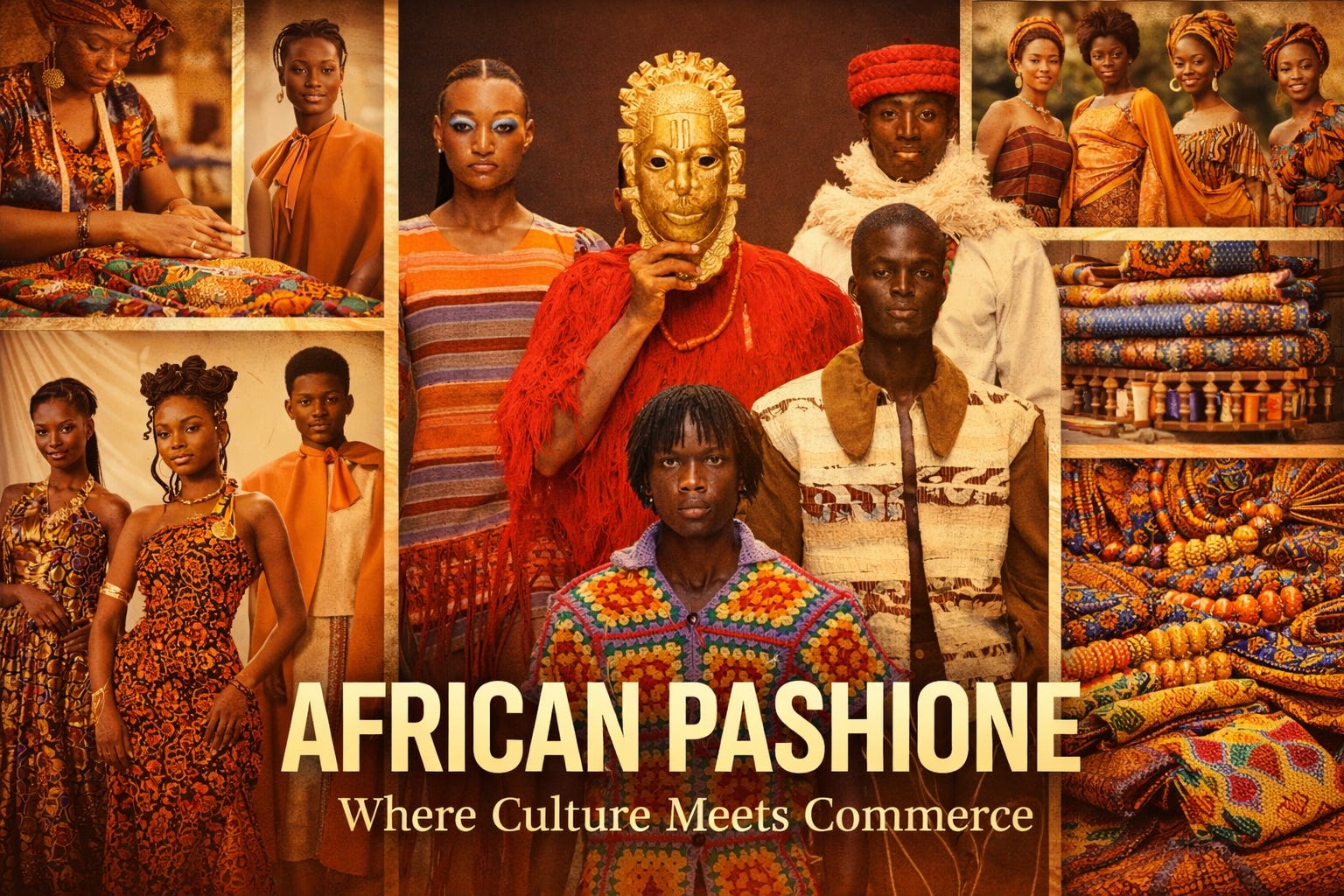
We operate across 18+ countries. We've onboarded over 950 vendors and brands. We're building the infrastructure that lets a designer in Lagos sell to a customer in London as easily as they'd sell to a neighbor.
And we're doing it by leaning into the very disciplines everyone thought I was leaving behind.
The GRC Advantage (The Part That Ages Well)
Here's what I told Matshepo that I'm most proud of because it's the part that's proven truest over time:
Most people miss that building in Africa isn't just logistically hard. It's structurally complex.
Cross-border payments break in ways they don't in more integrated markets. Customs regulations vary wildly from one country to the next. Trust the currency of e-commerce is harder to earn when buyers have been burned by counterfeits and failed deliveries.
This is where my background became our unfair advantage.
At Pashione, we approach vendor verification like a bank approaches KYC (Know Your Customer). We treat data security with the same rigor we'd apply to financial infrastructure. We build partnerships not because they look good, but because they're the only way to de-risk the business model at scale.
This is GRC thinking applied to e-commerce. And it's our moat.
Competitors can copy our features. They can't easily replicate the trust we're building because trust isn't a feature. It's a discipline.
Three months later, that's still the hill I'll die on.
What I Didn't Say in December
Because I wasn't ready to.
Matshepo asked about the future. Where is Pashione going? How do we scale from 950 vendors to 5,700 and beyond?
My answer then remains my answer now:
We build the rail. We deepen our strategic partnerships. We make the complex simple until buying African fashion online feels as natural and trustworthy as buying from anywhere else.
But here's what I held back in December:
Pashione is just one part of a larger vision.
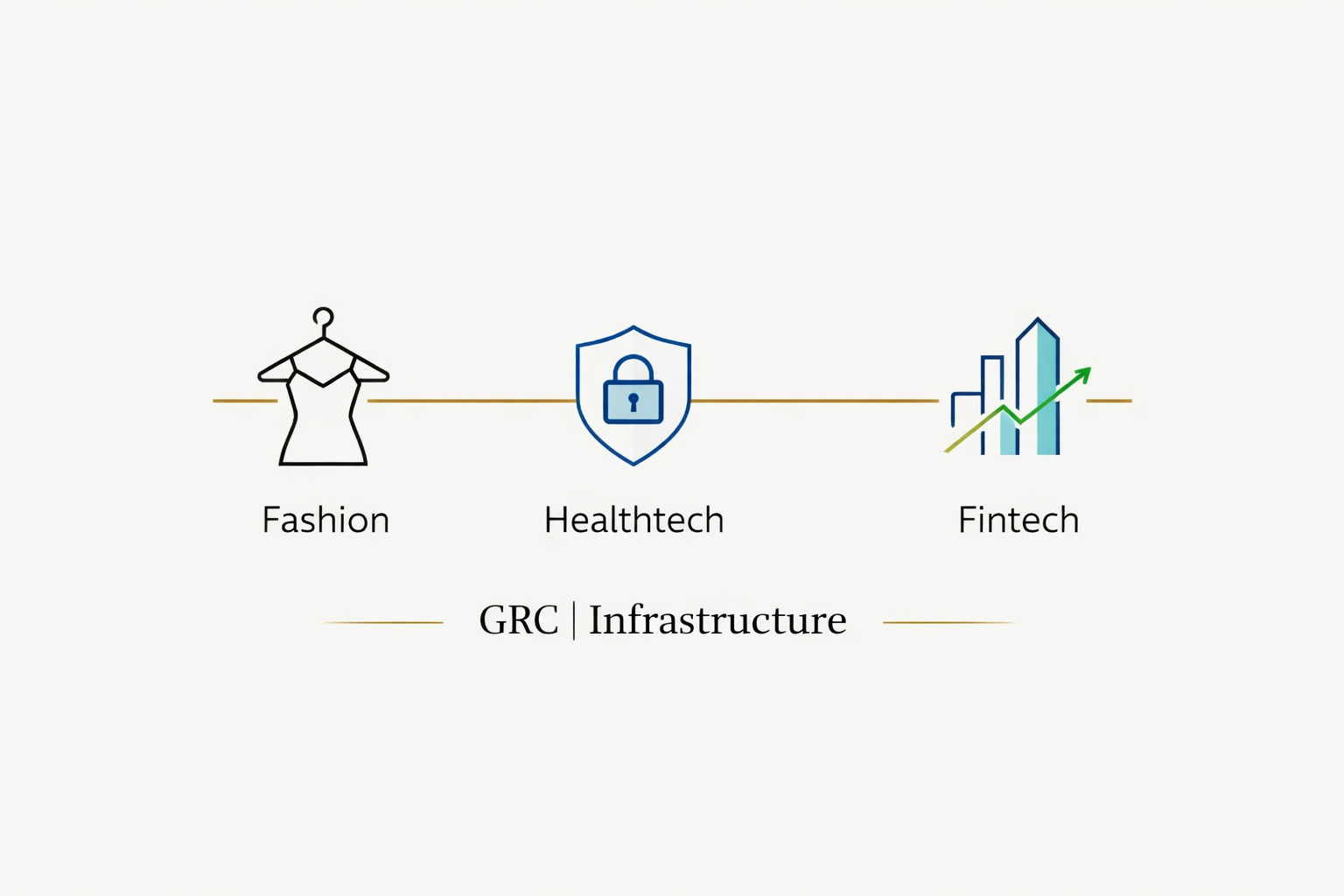
There's Medlitics—our healthtech arm—because the same infrastructure challenges that plague fashion also plague healthcare. Fragmented systems. Trust deficits. Compliance nightmares. The GRC playbook applies there too.
And there's Fintech—where this entire journey began because none of this works without robust, compliant payment rails.
What I've Learned in the Three Months Since
A few things, actually.
1. Features are moments. Building is forever.
The week the article dropped, my DMs were full. Inquiries. Speaking requests. Partnership interest. It was exhilarating and exhausting. But by week two, the noise faded and there we were, still at our desks, still solving the same problems, still showing up. That's the part that matters.
2. Your story lands differently when you let it breathe.
I was so focused on getting the messaging right in December that I probably over-engineered some answers. Three months later, I read the feature more generously. It's honest. It's me. And that's enough.
3. The diaspora is hungry for this.
The response that moved me most came from Africans abroad people in London, Atlanta, Toronto who said: "I've been looking for a way to buy authentic African fashion without guessing if it's real. Thank you." That feedback fuels everything.
4. The hardest problem is still the hardest problem.
Logistics across 18+ countries hasn't magically solved itself. But we're further along than we were. And the GRC mindset means we're solving it in a way that scales not just patching holes.
This is what The GRC Founder has always been about.
The wins. The failures. The frameworks. The lessons from building across three sectors in one of the most complex markets on earth.
If you've been here a while, you know the drill. We talk about infrastructure. We talk about trust. We talk about what actually works when the easy answers don't.
If you're just finding us welcome. You've joined a conversation that's been running for a while, and there's plenty more to come.
Either way, glad you're here.
A Question for You
Before I go, I want to ask you the same question Matshepo asked me in December:
What do you think is the biggest gap holding back African creativity from the global stage?
Is it logistics? Payments? Trust? Something else entirely?
Drop your answer in the comments or reply to this email if you're reading on Substack. I read every response.
Let's build.