


I have been in rooms with some of the sharpest investors on the planet.
Rooms where people do not talk about emerging markets and potential. Rooms where people talk about where the money is actually moving and why. And over the past few years one thing keeps coming up in those conversations that almost never makes it into the public narrative.
Africa.
Not as a charity story. Not as a development project. Not as a feel good investment with low returns and high risk. But as the single most underpriced opportunity in the global economy right now.
I know this because I have been building inside it for years. Three companies. Three sectors. Billions in addressable market. And a front row seat to what happens when you stop waiting for the world to catch up and just start building.
This is what I have seen. And this is exactly what those investors are seeing too.

Three Problems. Three Platforms. One Continent.
Africa’s fashion industry is one of the most underestimated creative economies on the planet. Talented designers, extraordinary craftsmanship, deeply rooted cultural identity and almost no global distribution infrastructure to match. African fashion brands were creating world-class products and selling them to local markets because nobody had built the bridge to get them to global consumers efficiently.
That is why I founded Pashione a social commerce marketplace that connects African fashion brands directly to consumers around the world. Not just e-commerce. Social commerce where discovery, community, and purchase happen in the same place, powered by the influence of real people rather than advertising budgets. The global fashion market in Africa alone is heading towards $50 billion by 2030. Pashione is building the infrastructure to capture that.
Then there is healthcare.
Over 250 million adults across Africa are living with chronic conditions diabetes, hypertension, cardiovascular disease. These are not rare illnesses. They are the daily reality of millions of families on the continent. And the healthcare system built to serve them is completely fragmented. Doctors cannot monitor patients between appointments. Insurers process claims without real-time data. Hospitals operate in silos. Patients fall through the cracks not because anyone is careless but because the infrastructure to keep them connected simply does not exist.
That is why I founded Medlitics an AI-powered chronic disease management platform that connects patients, doctors, hospitals, and insurers on one intelligent ecosystem. Real-time monitoring. AI-powered analytics. Automated claims processing. Built specifically for the African healthcare environment. The digital health market in Africa is already a $9 billion opportunity and we are building the platform that will define how it scales.
And then there is money specifically the movement of it.
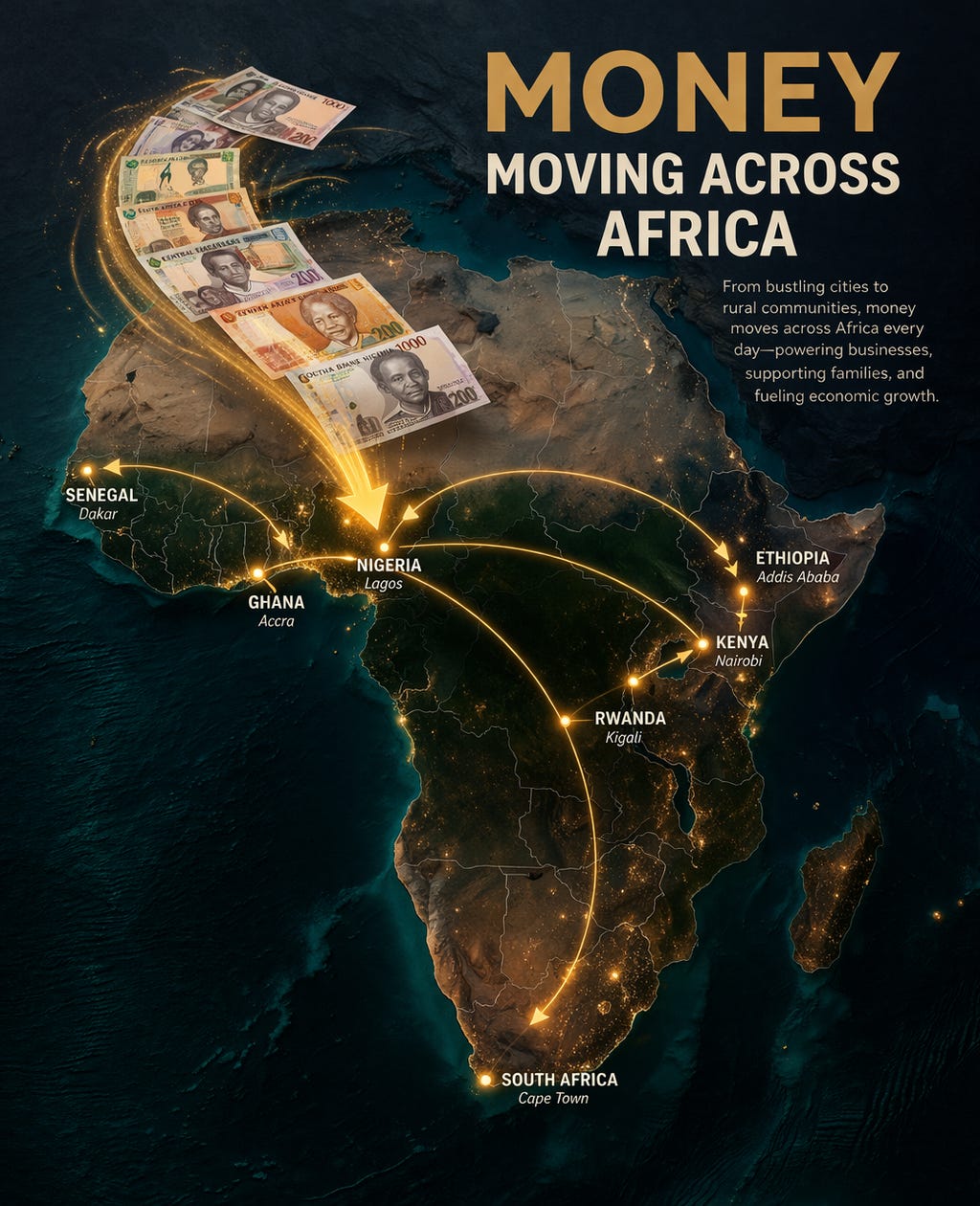
Cross-border payments in Africa remain one of the most inefficient financial processes on the planet. Sending money from Nigeria to Ghana two neighboring countries can cost more in fees and take longer than sending money from London to New York. The infrastructure gap is enormous. And so is the opportunity.
Africa’s cross-border payments market is worth $329 billion today. By 2035 that number is projected to reach $1 trillion. That is not a rounding error. That is the largest financial infrastructure opportunity on the continent.
That is why I co-founded 1App a cross-border fintech platform enabling seamless payments and financial access across Africa. In four years we scaled from ₦3 billion in cumulative transactions to over ₦7 billion proof that when you build the right infrastructure with the right team, African fintech can move fast and scale hard.
What Building in Africa Actually Teaches You
None of these journeys happened in a straight line. None of them happened alone.
Every milestone belongs to co-founders who bet on vision before there was proof. Early team members who showed up before there was a salary to justify it. Partners who took risks because they believed in the mission. Advisors who gave time they did not have. And customers the patients, the fashion consumers, the merchants sending money across borders who trusted us with something real and personal before we had earned that trust completely.
Building in Africa teaches you things that no MBA program, no accelerator, and no Silicon Valley playbook can prepare you for.
It teaches you that infrastructure is not a given you have to build it or work around it every single day. It teaches you that your customer’s reality is different from your assumptions and that the only way to build something that actually works is to spend real time in that reality. It teaches you that speed matters not because of competition but because the problems you are solving are costing lives, livelihoods, and opportunities every single day you are not live.
And it teaches you that Africa does not need saving. It needs builders.
What the Smart Money Is Seeing
Here is what those investors in those rooms already understand that most people are still figuring out.
Africa’s digital economy is growing faster than its infrastructure can keep up with. That gap between what exists and what is needed is where the opportunity lives. And the founders who move now, with discipline and long term vision, will define what that infrastructure looks like for the next generation.
The numbers across our three platforms tell that story clearly.
African fashion is heading towards a $50 billion market by 2030. African digital health is a $9 billion opportunity with millions of patients still unserved. Africa’s cross-border payments market sits at $329 billion today and is heading to $1 trillion by 2035. Even capturing a small fraction of each of these markets represents billions in revenue.
For investors this is not one big bet. This is three high-growth sectors with shared infrastructure, overlapping distribution advantages, and clear paths to enterprise and B2B2C revenue that compound in value as each platform grows. The combined addressable market across all three sectors exceeds $400 billion. The growth rates are among the highest of any market on the planet.
Our 2026 targets: 2x users across platforms, $50 million in combined revenue, 500,000 active users, and $10 million in funding.
Those are not projections built on hope. They are milestones we are already moving towards.
The Quiet Movement Has Already Started
The smartest investors I know are not talking loudly about Africa. They are moving quietly and deliberately because they understand that the window to get in early on the continent’s infrastructure layer is open right now and it will not stay open forever.
I have spent years building inside that window. Three companies. Three sectors. Billions in addressable market. And a front row seat to what happens when you stop waiting and start building.
If you are an investor, a partner, or a builder who sees what I see this is the moment.
Drop me a message. Let’s set up a call.