

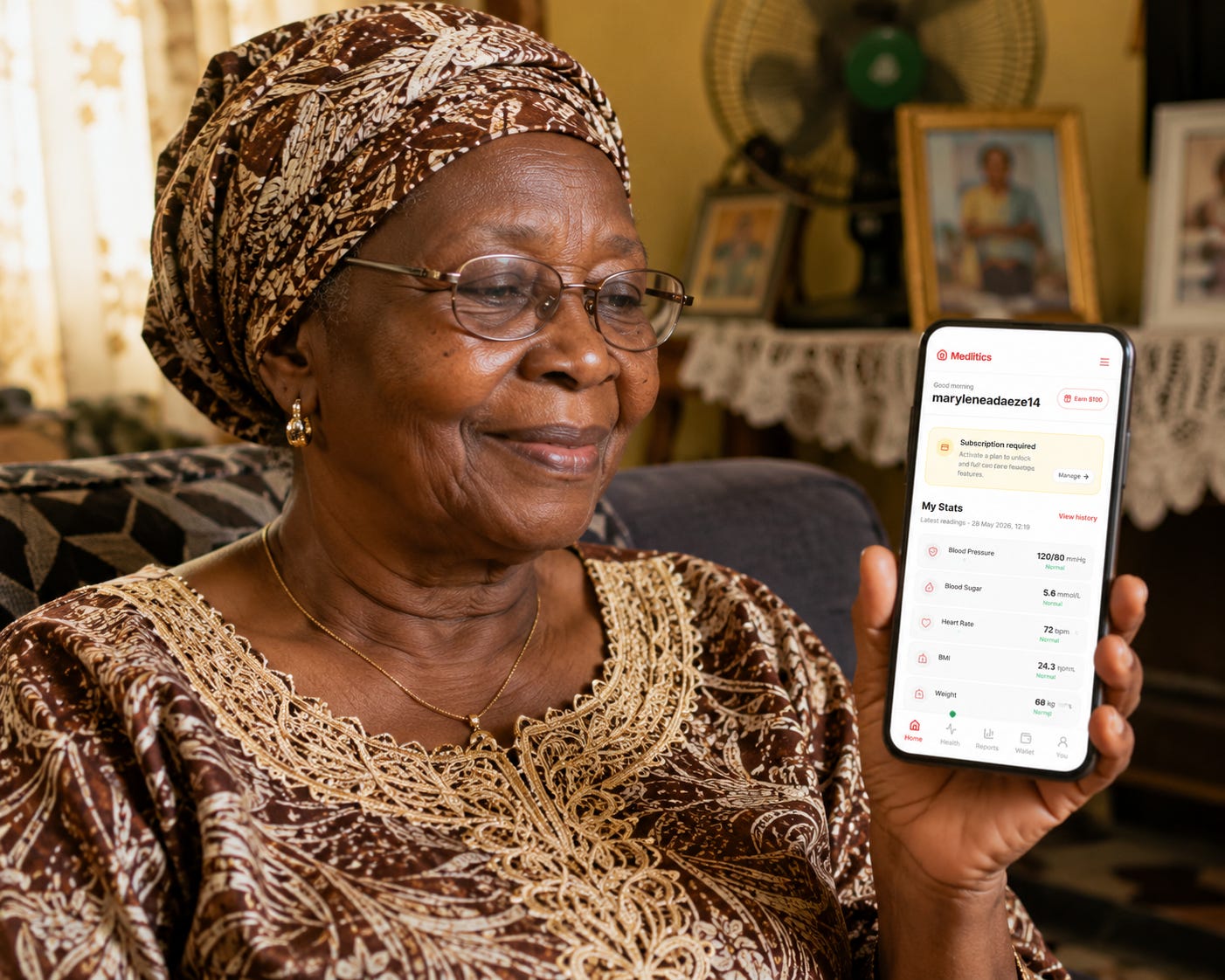
Maria’s fingers trembled as she checked her blood pressure for the third time that week.
165 over 95.
Again.
She’d been taking her medication, or at least, most of the time. But without seeing a doctor regularly, she never really knew if it was working. And the headaches... were they from the stress or a warning sign?
It was 2 PM on a Thursday, and her doctor’s clinic wouldn’t open again until Monday. Even then, she’d have to take time off work, spend ₦5,000 on transport, and wait 3 hours to see him for 10 minutes.
So she did what millions of Nigerians do: She worried in silence and hoped it would be okay.
This is the reality of chronic disease management in Nigeria.
And it’s costing us thousands of lives every year.
Part 1: The Silent Epidemic
The numbers are staggering, but they don’t capture the real story.
3.6 million Nigerians have diabetes. 1 in 4 adults have hypertension. Millions more have asthma, COPD, heart disease, and kidney disease.
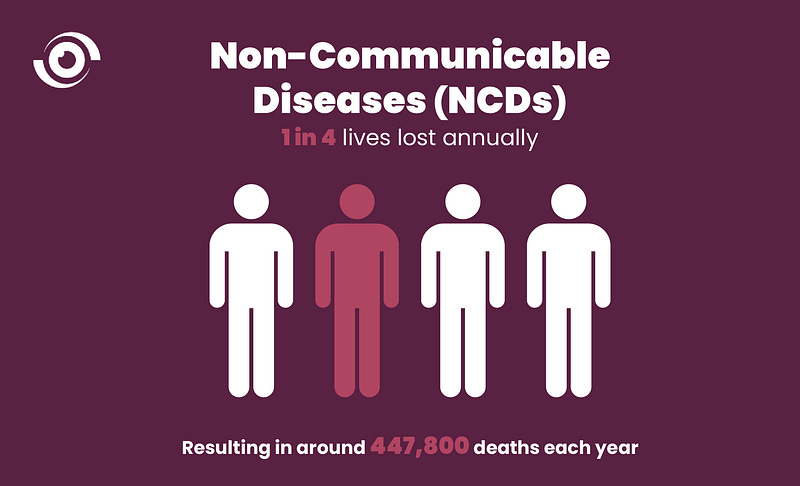
But here’s what the numbers don’t tell you: Most of these people are managing their diseases in the dark.
They don’t have regular monitoring. They don’t have consistent access to medication. They don’t have a doctor checking in on their progress. They’re essentially flying blind, hoping their treatment is working, not knowing if complications are developing, managing their condition through memory and guesswork.
The result?
Preventable blindness from uncontrolled diabetes
Strokes from untreated hypertension
Amputations from poor wound care
Kidney failure requiring lifelong dialysis
Death from complications that never needed to happen
In the Western world, these outcomes are rare. In Nigeria, they’re epidemic.
Why? Not because we lack doctors or medicine. We lack the system that connects all the pieces.
Part 2: Why Our Current System Is Broken
Let’s trace Maria’s journey through the current healthcare system:
Month 1: Maria visits a clinic because her coworker says her blood pressure seems high. The nurse checks it: 165/95. The doctor prescribes a medication and says “come back in 3 months.”
Months 1-2: Maria takes the medication, but it causes dizziness. She doesn’t know if this is normal. She can’t reach her doctor to ask. She starts taking it every other day to reduce the side effects.
Month 3: Maria returns to the clinic. Her blood pressure is 160/100, still high, but the doctor doesn’t realize she’s only been taking the medication half the time. He increases the dose.
Months 3-5: The higher dose makes the dizziness worse. Maria stops taking it entirely. No one knows.
Month 5-6: Maria has a severe headache and vision changes. She goes to the ER. They discover she’s had a small stroke, permanent damage to her vision.
The Hospital Bill: ₦250,000+
The Outcome: Permanent disability
What Could Have Prevented It: Proper monitoring and medication adjustment after Week 1
This story repeats thousands of times daily across Nigeria because of fundamental gaps in our healthcare system:
Gap 1: No Continuous Monitoring
Doctors see patients once every 3-6 months. Between visits, they have zero visibility into what’s happening. Is the patient taking their medication? Are their readings getting better or worse? Are complications developing?
No one knows.
Gap 2: No Communication Channels
If Maria had a question or side effect, her only option was to visit the clinic again, expensive and time-consuming. So she suffered in silence.
Gap 3: No Real-Time Data
Treatment decisions were made based on one snapshot in time, the day of the appointment. If Maria’s BP was high that day, the doctor might assume she was stressed about the clinic visit, not realizing it’s been high all week.
Gap 4: No Medication Adherence Support
No one reminded Maria to take her medication. No one delivered it to her home. No one verified she was actually taking it. She just had to remember on her own.
Gap 5: No Coordination
The doctor, the pharmacy, and the insurance company weren’t talking to each other. If Maria couldn’t afford her medication, the doctor wouldn’t know. If the pharmacy didn’t have it in stock, there was no backup plan.
Gap 6: No Incentives for Prevention
Everyone, patient, doctor, insurer, was incentivized for crisis care, not prevention. Hospitals made money from admissions. Insurance paid for emergencies. No one made money from keeping Maria healthy and out of the hospital.
The result: A system optimized for treating emergencies, not preventing them.
Part 3: The Connected Solution
What if all these gaps could be closed?
What if Maria’s healthcare was managed by a system instead of scattered appointments?
Meet the new reality. Let’s trace Maria’s journey through a connected system:
Day 1: Maria signs up on Medlitics (free, takes 5 minutes). She logs her hypertension diagnosis.
Day 2: She’s given a simple blood pressure monitor (affordable, ₦15,000, shared with her family if needed). She takes her first reading and logs it: 165/95.
Day 3: A nurse practitioner on Medlitics reviews Maria’s baseline reading. It’s high. She sends Maria a message: “Hi Maria, I see your BP is elevated. Let’s find the right medication for you. I’m recommending medication A, let’s try it for a week and see how you feel.”
Week 1: Maria takes the medication consistently. She logs her BP daily (takes 1 minute). The readings trend: Day 1 (165/95) → Day 3 (158/92) → Day 5 (152/88) → Day 7 (148/85).
Day 8: The practitioner reviews the week’s data. Maria’s BP is responding well. No concerning side effects. The plan is working.
Week 2: Maria continues monitoring. Her readings stabilize around 140/82.
Week 3: Average BP is 135/80, normal range. The practitioner sends an encouraging message: “Maria, you’re doing great! Your BP is now in the healthy range. Keep up this routine.”
Week 4: One day, Maria’s BP spikes to 160/95. The system alerts the practitioner. She calls Maria: “Your BP was high today. How are you feeling? Any stress? Skipped your medication?”
Maria admits she forgot her medication because she was traveling. The practitioner helps her set up a phone reminder. The next day, with the medication, her BP is back to normal.
Month 2: Maria’s average BP is consistently 130/80. She hasn’t had a single concerning reading. No one is worried. Everyone is confident the medication is working.
Ongoing: Every week, the practitioner checks Maria’s data. Every month, they review trends. If something concerning appears, it’s caught immediately. If Maria has questions, she can message anytime.
One Year Later: Maria’s BP has been controlled for 12 months straight. She’s never had a stroke scare. She’s healthy, confident, and engaged in her own care.
The difference between these two versions of Maria’s life? A connected system that monitors, supports, and intervenes.
Part 4: How The System Works
Medlitics connects four key players:
1. Patients
You have a dashboard where you:
Log your health metrics (BP, glucose, weight, etc.)
Take your medications (with reminders)
Message your practitioner anytime
See your trends and progress
Connect with others managing the same condition
Understand your insurance coverage
2. Practitioners (Doctors, Nurses, Health Workers)
You have a monitoring dashboard where you:
See all your patients’ health data in real-time
Get alerts when patients need urgent attention
Send messages and schedule consultations
Adjust treatments based on actual data
Earn money from consultations and successful patient management
Build a reputation for excellent care
3. Pharmacies
You’re integrated so that:
Prescriptions flow directly from practitioners
Patients can order refills easily
Medications are delivered to homes
Medication adherence is tracked
You reach more patients through the network
4. Insurance Companies
You gain:
Real-time visibility into member health
Data to identify high-risk patients
Ability to intervene before expensive complications
Lower claim costs from prevention
Better member satisfaction
Part 5: Why This Actually Works
The evidence from integrated healthcare systems worldwide is overwhelming:
When chronic diseases are managed through connected systems like this, outcomes improve dramatically:
Medication Adherence: Increases from 40% to 85%+
Emergency Room Visits: Decrease by 40%
Hospital Admissions: Decrease by 30%
Preventable Complications: Decrease by 50%
Patient Satisfaction: Increases by 60%
Healthcare Costs: Decrease by 20-30%
But why does it work so well?
Reason 1: Continuous Data
You’re not making decisions based on one snapshot. You’re seeing the full picture of what’s actually happening.
Reason 2: Early Intervention
Problems are caught early, before they become crises. A concerning trend triggers a conversation with your doctor, not an emergency room visit.
Reason 3: Accountability
Both patient and practitioner are engaged. The patient knows their doctor is watching. The practitioner can identify who needs help.
Reason 4: Motivation
Seeing your own data, watching your BP trend from 165 to 135, is motivating. It shows that treatment is working. It builds confidence.
Reason 5: Accessibility
You can reach your doctor anytime through the app. Small questions don’t require a clinic visit. Treatment adjustments can happen quickly.
Reason 6: Affordability
By preventing expensive complications, the overall cost of care is lower. Insurance companies can afford better benefits. Patients can afford better care.
Part 6: The Real Stories
Story 1: Perpetua, a Nurse with Hypertension
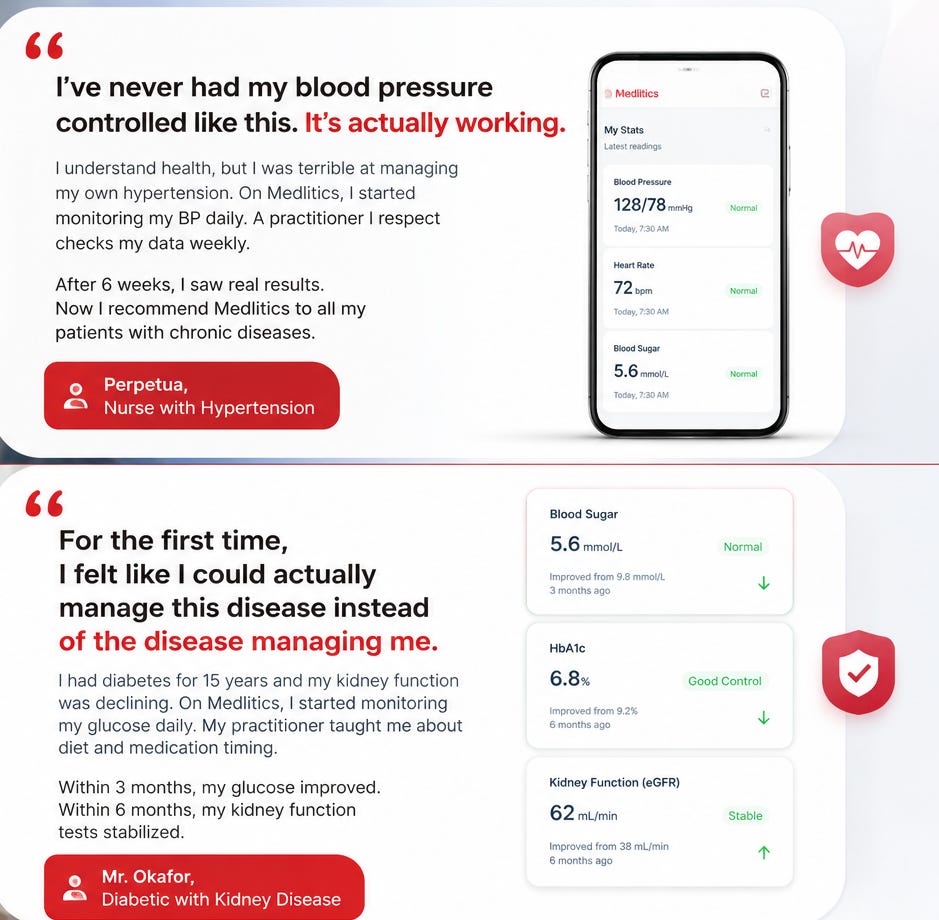
Perpetua is a nurse who understands health but was terrible at managing her own hypertension. She’d monitor patients all day but forget to take her own medication.
On Medlitics, she started monitoring her BP daily. A practitioner she respected checked her data weekly. After 6 weeks, she said: “I’ve never had my blood pressure controlled like this. It’s actually working.”
Now she recommends Medlitics to all her patients with chronic diseases.
Story 2: Mr. Okafor, Diabetic with Kidney Disease
Mr. Okafor had diabetes for 15 years and his kidney function was declining. His doctor kept saying “control your diabetes better,” but he didn’t know how.
On Medlitics, he started monitoring his glucose daily. His practitioner taught him about diet and medication timing. Within 3 months, his glucose readings improved. Within 6 months, his kidney function tests stabilized.
“For the first time,” he said, “I felt like I could actually manage this disease instead of the disease managing me.”
Part 7: Getting Started
If you have a chronic disease, or if you love someone who does, this is an invitation.
Step 1: Go to MEDLITICS WEBSITE
Step 2: Sign up (it’s free)
Step 3: Log your condition
Step 4: Start monitoring
Step 5: Connect with a practitioner who will support you
The system is waiting. The data-driven, practitioner-supported, continuously-monitored approach to chronic disease management is available now.
You don’t have to manage your chronic disease the way Maria did in the first version of her story.
You can manage it the way she did in the second.
The Bottom Line
Chronic disease management in Nigeria doesn’t have to be fragmented, expensive, and scary.
Technology, when designed thoughtfully, can connect all the pieces, patients, practitioners, pharmacies, and insurers, into a system that actually works.
Better management today means fewer strokes, fewer amputations, fewer emergency room visits, and more people living long, healthy lives.
The technology exists. The evidence is clear. The impact is proven.
What’s missing is you.