

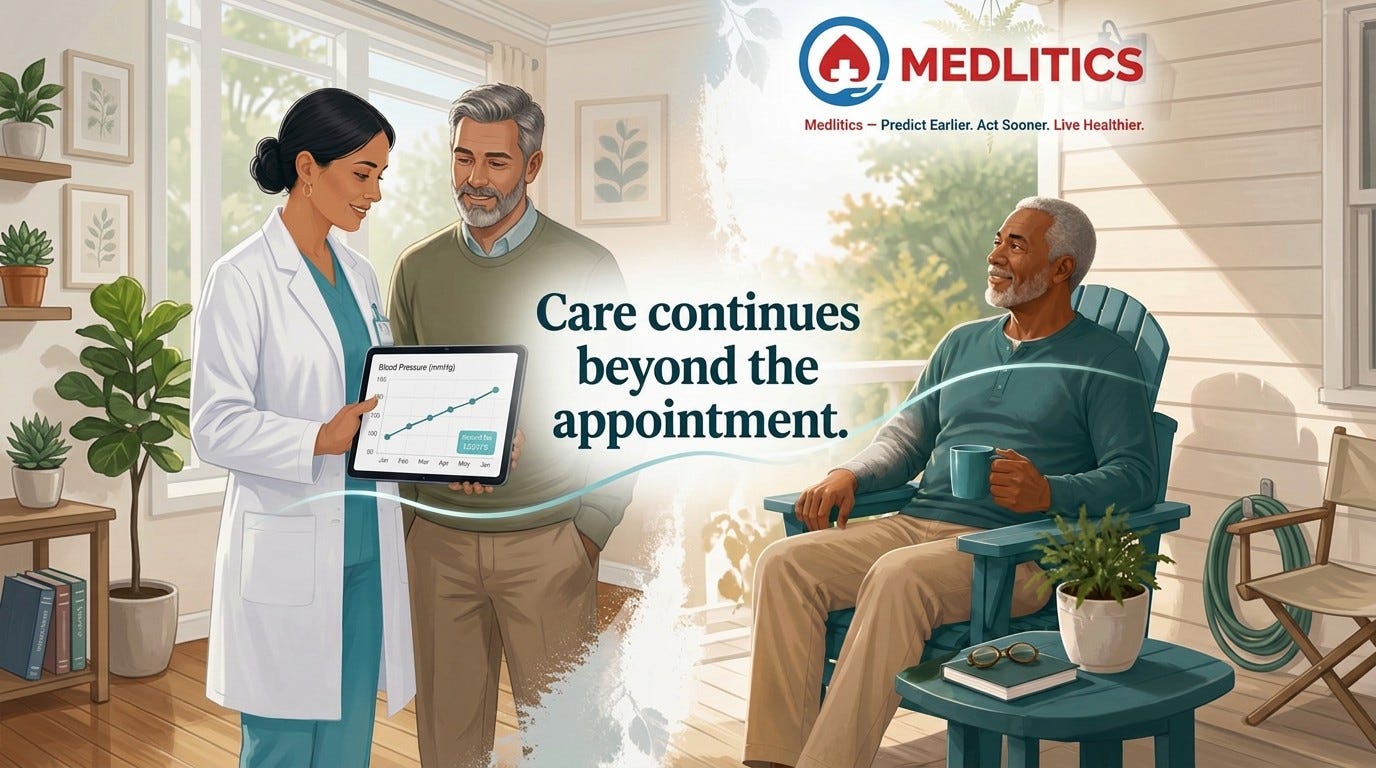
Chronic disease management in Nigeria is not only about making a diagnosis or choosing a treatment. It is also about what happens between appointments: whether patients can keep up with their care plan, whether someone notices when follow-up is missed, and whether clinicians have useful information when they next meet.
The scale of the challenge is significant. In its 2023 Nigeria hypertension profile, the World Health Organization estimated that 19.1 million adults aged 30–79 were living with hypertension, and estimated that 7.6 million more people would need effective treatment to reach a 50% control rate. These are national planning estimates, not a count of patients at any one hospital; the profile labels its prevalence data as 2019.cdn.who
The care gap often appears between visits
A clinic visit offers a snapshot. A person’s blood pressure, glucose readings, medication routine, symptoms, and ability to return for care can change after they leave. If those changes are not captured or followed up, the next appointment may begin with an incomplete picture.
For people managing diabetes or hypertension, continuity means more than scheduling another visit. It means agreeing on what should be monitored, deciding who will review the information, and making clear what happens when a patient misses a check-in or needs clinical attention.
The World Health Organization’s 2025 hypertension report recommends stronger patient tracking and recall, team-based care, and effective digital information systems. It also describes mobile tools and telemedicine as ways to support follow-up, while emphasizing clinical protocols, referral pathways, and appropriate supervision.iris.who
Digital follow-up should support a care team
A digital tool can make it easier to record readings, send reminders, flag information for review, or help a care team follow up after a missed appointment. But the tool is only useful when it fits into a defined care process. A reminder without a person or process behind it is not continuity of care.
Hospitals and health insurers should start with the clinical workflow, not the app. Who reviews incoming readings? How quickly should they be reviewed? Which clinician-approved protocol guides the next step? What should happen when a patient reports a concerning reading, stops responding, or cannot access the service?
Digital support should not be presented as a diagnosis or a substitute for a clinician. Any automated flag should lead to an appropriate human-led review or a clearly defined next step, based on the care team’s protocols.
What hospitals and insurers should evaluate?
A promising demo is not enough to show that a digital follow-up service will work in daily care. Before adopting one, assess whether it can fit the organization’s staffing, patient population, clinical pathways, and information systems.
Consider these questions:
Clinical ownership: Is a named care team responsible for reviewing information and acting on it? Are thresholds, escalation routes, and referral criteria agreed in advance?
Patient access: Can people use the service with the devices and connectivity they have? Is there a practical alternative when an app or mobile data is not an option?
Workflow fit: Does the service connect to existing records and processes, or will staff have to manage another disconnected queue?
Privacy and security: What information is collected, who can access it, how long is it kept, and how are access and changes recorded?
Evidence of value: Will the organization track whether follow-ups are completed, readings are reviewed on time, missed appointments are addressed, and clinical measures improve?
Nigeria’s Data Protection Act classifies health status as sensitive personal data. It also sets requirements around lawful and transparent processing, defined purposes, data minimization, retention, and security; health organizations and vendors should document the applicable legal basis and safeguards for their specific use case.ndpc.gov
A practical implementation checklist
A focused pilot can help an organization learn whether a digital follow-up pathway is workable before expanding it. Start with one condition, one patient group, and one care team, then agree on what success will mean.
Map the pathway: Document enrollment, consent or other applicable legal basis, monitoring, review, escalation, missed follow-up, and return to routine care.
Set clinical rules: Confirm who reviews information, which protocols apply, and when a patient should be referred or contacted.
Plan for real-world access: Test the service with the devices, data access, language needs, and support options patients are likely to use.
Measure the process: Track participation, timely review, follow-up completion, and unresolved escalations alongside appropriate clinical measures.
Review before scaling: Ask patients and staff what worked, identify bottlenecks, and improve the workflow before expanding to another group.
Avoid promising reduced costs, fewer complications, or better disease control before those outcomes have been measured in the service being implemented. A pilot should produce evidence about both the technology and the care process around it.
Scoping a Medlitics diabetes pilot in Nigeria
A Medlitics pilot should test a specific care workflow, not launch a broad program before the clinical and operational details are clear. The initial goal would be to see whether a partner hospital, clinic, or health plan can use digital follow-up to stay connected with adults already receiving diabetes care between visits.
A practical first scope could include:
One partner and one cohort: Select a Nigerian care setting and invite a manageable group of adults already enrolled in diabetes care. Set the cohort size according to the partner’s capacity to review check-ins and follow up.
A partner-led care plan: The partner’s clinical lead decides what information to collect, how often to check in, which readings or responses need review, and what follow-up is appropriate. Medlitics supports the agreed workflow; it does not diagnose diabetes or make treatment decisions.
Named clinical ownership: Identify who reviews patient information, the expected review window, how unresolved check-ins are handled, and what patients should do if they need urgent help. Make clear that the digital service is not an emergency channel.
A proposed 12-week first cycle: Use a short setup and onboarding period, an active follow-up phase, and a closeout review. The partner should confirm the schedule and any clinical measures based on its protocols and capacity.
Measures agreed in advance: Track enrollment, completed check-ins, timely review, follow-ups completed, unresolved escalations, and patient and staff feedback. Where the care team already collects measures such as HbA1c, assess them according to the partner’s usual clinical schedule. Set success criteria before enrollment and report results without claiming clinical impact or savings that the pilot has not demonstrated.
Privacy and data responsibilities: Agree which organization determines the purpose of processing, who can access patient information, how long it is kept, and how patients are informed. Nigeria’s Data Protection Act classifies health status as sensitive personal data, so the partner and service provider should document the applicable legal basis and safeguards for the pilot.ndpc.gov
At the end of the cycle, the partners can review what patients used, what the care team could act on, where follow-up stalled, and whether the workflow is ready to adapt or expand. For Nigerian hospitals and health plans interested in exploring this approach, the next step is a joint scoping conversation with Medlitics to define the cohort, workflow, responsibilities, and measures before a pilot begins.
At Medlitics, we see digital follow-up as a way to help care teams stay connected to patients between visits, not as a replacement for clinical judgment. If your hospital or health plan is exploring a more consistent approach to diabetes or hypertension follow-up, we welcome a conversation about a carefully scoped pilot.